In a previous post, I said YES! to whether I would still choose to become an actuary in 2024.
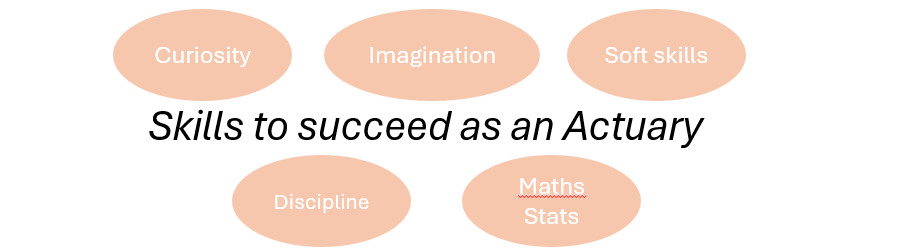
If you also decided that an actuarial career sounds interesting to you, what do you need to become a qualified actuary and to succeed ultimately while practicing as an actuary?
1 Strong on maths
You don’t need to calculate 432*1415 in your head, but you need to mentally wrestling with abstract concepts. This is what higher level maths is all about, a way of thinking. Today, I don’t waste mental power doing simple arithmetic that Excel excels at, but I do form mental models of analytic flows, business processes.
Statistics hinges on maths. You will have to become proficient in university level statistics through those actuary exams. Even if you may only need a fraction of all the concepts you learn, the training prepares you to adaptively navigate future challenges.
2 Be disciplined
Passing exams will require that you invest a number of years, balancing work/studying/life. It took me 4.5 hard years to complete the exams. But I believe such hard journeys are critical in making you self-aware, up your game and become more confident/capable of tackling future challenges in life.
There are also definite HACKS that can make the process more efficient. In another post, I’ll share how I did it and give you valuable tips. Sign up to my newsletter.
3 Curiosity and Imagination
are what will make you an exceptional actuary instead of a mediocre one. The thirst to seek innovative solutions, AND the ability to imagine how such solutions will pan out will enable you to embrace complex challenges AND be able to efficiently navigate different solution paths. Being able to follow the pareto principle, see and adopt simpler solution paths, will make you an invaluable team member.
4 People/soft skills
This may be a surprise, considering the stereotype of “nerdy” actuaries. Beyond foundational technical chops, your soft skills will determine how well you will succeed in your actuarial career. The more articulate, and able to influence people you are, the faster you will climb the corporate ladder or capture emerging opportunities.
What about non-traditional roles?
After 13ish years practicing as an actuary, I branched out into health care services, startups, and have found the process stimulating and challenging (in a nice way). More posts coming on this topic in the future. Sign up to get notified when these go up!
While plenty actuaries do well in traditional actuarial roles, more and more are branching off into non-traditional areas, including tech, marketing, investments, consulting etc. The 4 attributes discussed above, as well as the solid foundation the actuarial education provides, will set you up for success in these new fields. These non-traditional fields will also require broader skill sets such as product development, software engineering, finance etc. Specifically, when you work with non-actuarial/analytical colleagues, soft skills become even more important.

 The Analytics Pro